Biological evolution is the “...change in the characteristics of descendent populations of organisms”, organisms today being the modified (not meaning ‘better’) descendants of previous species, resulting in all living species having once had a common ancestor right here on Earth (Hurry 1993: 1-2). With there being 8 million possible chromosome combinations in Homo sapiens meiosis, and therefore a zygote upon random mating having a possibility of 64 trillion combinations of chromosomes (Campbell et al. 2009: 141), sexual reproduction of organisms generates variable offspring, allowing the descent of generation to generation with modification giving rise to great diversity in and between species (Hurry 1993: 2). You are not evolving, you have evolved, and if you have children, they will be the next organisms at the height of the evolutionary tree with that of the next generation of cats, pigeons, grasshoppers etc. The aim of this essay is therefore to shed light on a few of the misguided misconceptions.
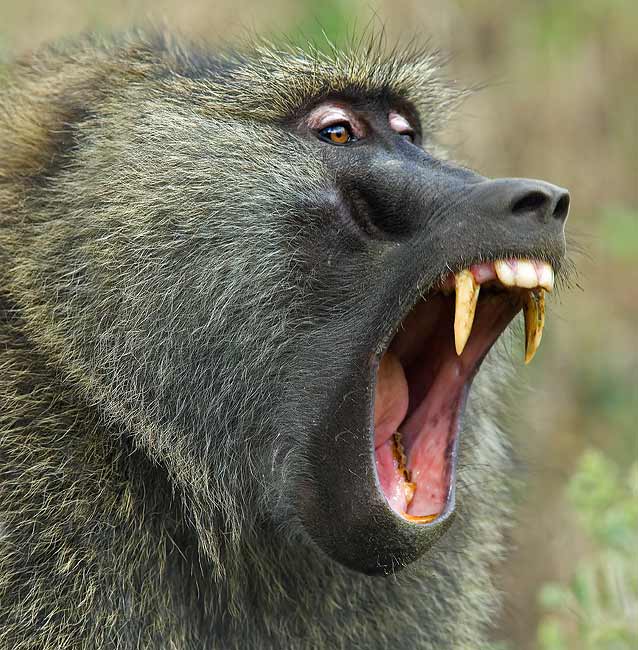
Misconception One: A Chimpanzee is a monkey. In fact, both are primates, sharing common features such as; a generalised body plan, grasping hands with opposable thumbs and/or big toes, flattened nails, forward facing eyes, generalised teeth, have large brains for body size etc. But there are also differences within the primate family. Apes (including us and chimpanzees) and monkeys come under the suborder Haplorhini, but New World Monkeys (NWM) live in sub/tropical areas, have small body sizes, have three premolar teeth and are all arboreal, some having prehensile tails. The Old World Monkeys (OWM) live in parts of Africa, Asia and the Middle East, have ischial callosities, bilophodont molars and display a greater size range and sexual dimorphism than NWM, while the apes (the Hominoids) possess rotating, suspensory shoulders and lack tails (Stanford et al. 2009).
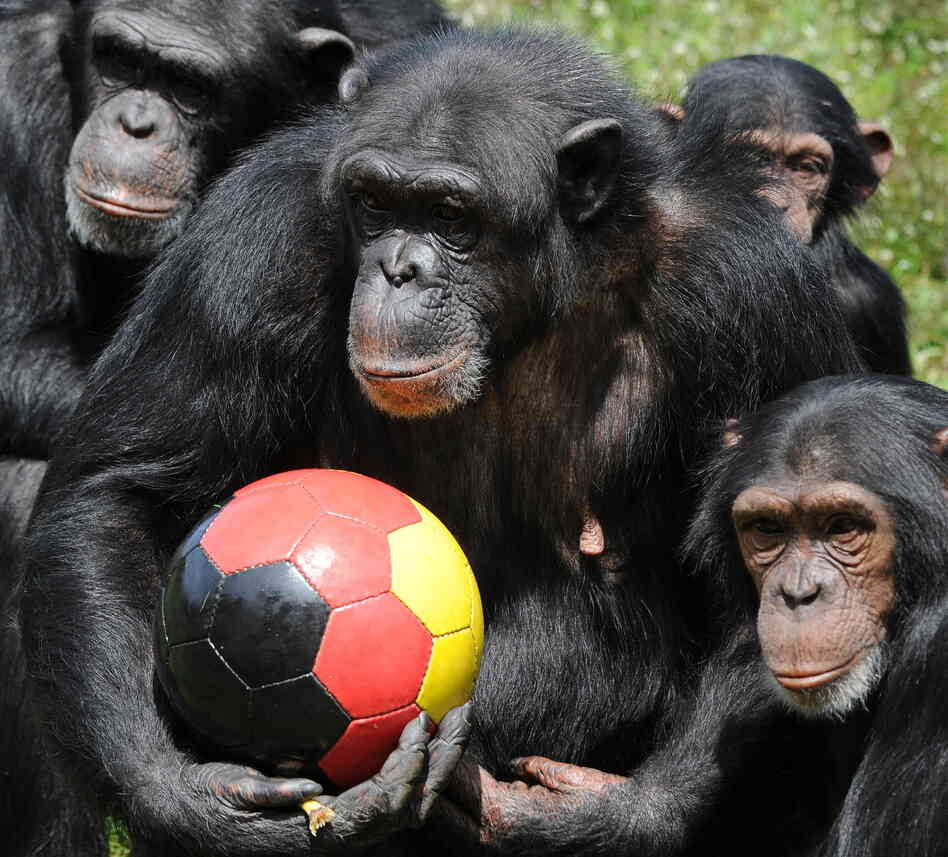
Misconception Two: Humans evolved from Chimpanzees. However, we are merely similar apes, chimpanzees being our closest living relatives. “The genetic similarity between a chimpanzee and us is greater than the chimpanzee’s evolutionary affinity to a gorilla” (Ibid: 189). Meikle and Scott (2010) explain the link between chimpanzees and us as a cousin relationship, mentioning that nobody would refer to having come from their cousin, yet cousins share a common relative. Using this information and that of the modern primate family tree, one can clearly see that humans share a closer ancestry to other apes, than apes do to monkeys, but we in turn still share an ancestry with monkeys. Even fruit flies share nearly 60% of their DNA with humans (BBC 2000), although our common ancestor with fruit flies is much further away than that of us and monkeys.
 The divergence time of OWM and Hominoidea is approximately 30 million years ago, while it is about 5.9 million years ago when humans and chimpanzees diverged (Lewin & Foley 2005: 201). But this divergence has been greatly argued about, many people expressing the idea that somewhere there should lie a missing link; a fossil that provides the link between humans and apes (Ibid: 228). Misconception three: We still haven’t found the missing link. In fact, there is a wide range of evidence supporting that chimpanzees and humans are close relatives. For one, the similarities in anatomical structure is very close, such as the rotating, suspensory shoulders and the lack of tail. Secondly, the comparison of DNA has shown little difference; “The more distant the evolutionary relationship between two organisms, the more differences there will be in the amino acid sequences of these proteins”. Even chromosome shapes are similar, as well as almost identical banding patterns, African apes and humans being susceptible to many of the same diseases and parasites (Tanner 1981: 34). Therefore genetic comparisons has shown that between individual humans, there is about 0.1% difference, between Chimpanzees and humans: 1.2%, the Bonobo differing to the same degree, 1.6% between gorillas and all apes mentioned above, and a 3.1% difference between all apes mentioned above and the Orangutan (Human Origins.si.edu). So far, even if there wasn’t a fossil record of pre Homo sapiens, there is brilliant evidence for the link between Chimpanzees and us. As Dawkins (2009: 150-151) states; “...we now have a rich supply of intermediate fossils linking modern humans to the common ancestor that we share with chimpanzees. On the human side of the divide, that is”, he goes onto say that no fossils are available linking an ancestor to modern Chimpanzees, and that this may be due to forests where Chimpanzees reside, not providing good fossilising conditions. But the fossil record is rich in abundance, from Sahelanthropus tchadensis to Australopithecus afarensis, all the way to Homo sapiens.
Fossil evidence of early hominins has shown that our ancestors were bipedal before our brains expanded. As primates, we all have large brains for our size, which is mainly down to the consequence of having unusually large neocortices. Humans have the largest neocortex accounting for 80% of our brain volume (about 10-40% in non-primate mammals, about 50% in prosimians) (Dunbar et al. 2007: 113). We are therefore extremely social and are dependent upon our material culture. But vanity has indeed created misconceptions. Misconceptions four and five: The ladder of perfection (LOP) and Intelligent Design (ID). Both these misconceptions are closely intertwined since; ID states that to have such complexities in nature, there must be a purposeful designer (Scott 2005:63), the earth and its habitats being created for humans because of our ‘specialness’ (ICR.org), whereas LOP is a belief where evolution is climbing a metaphorical ladder and human beings are the end goal (McPherson Smith & Sullivan 2007). Many examples could be used to discount these misconceptions; this essay will use the example of bipedialism. “Of some 4,000 living mammals, only humans are habitual striding bipeds today” (Stanford et. al 2009: 290), and if ID and LOP were true, only perfection could arise from this, but, like all adaptations, problems arise as well. Such problems are; lower back problems due to weight increasing further down the spine you go, babies having to rotate and causing pain to mother during childbirth due to narrow pelvis and large brain size (Ibid: 292-293), fractures/breaks occurring at the femoral neck due to weight bearing etc. It is doubtful that bipedialism would have any adverse effects if we were the perfect specimen designed by a higher deity.

To conclude, there is an abundance of evidence supporting evolutionary theory. However, with anything, something must be first explained in proper detail and understood before it can be accepted or debated. Misinterpretations are readily taught and passed onto others and this is where much of the problem appears. Misconceptions can easily be remedied if those in the wrong take the time to listen. Apprehension is created with the belief that learning evolution may convert the religious, but Rice et al. (2010) shows, those of a theistic position can too learn evolutionary perspectives, although one misconception in this essay touched lightly on the topic of religion. However, the nature of this blog post only asks for others to understand the knowledge before reproducing it.
[NOTE: I know that one particular objection to evolution, surrounding Intelligent Design is the eye. How could the eye come about?! But this is a terrible argument for ID as the eye has design flaws in itself such as the blind spot. However, if you're curious about how the eye could have evolved, watch this youtube clip where Richard Dawkins demonstrates how the eye could have evolved in an old Christmas lecture]
[NOTE: I read a book titled 'A Universe from Nothing' by Dr. Lawrence Krauss a while ago. Krauss argues how a universe could come about from nothing, with no externalities or magic involved. If you're interested, watch his youtube clip]
[NOTE: Here's a youtube clip of Derren Brown speaking about Intelligent Design]
References: [Online sources are already referenced in the text but titles will be
included under the heading - Online Sources - in case links don't work]
1.
Campbell, N.A., Reece, J.B., Taylor, M.R.,
Simon, E.J., Dickey, J.L. (2009). Biology:
Concepts and Connections. Pearson Benjamin Cummings: San Francisco
2. Dawkins, R. (2009). The Greatest Show on Earth. Transworld Publishers: London
3. Dunbar, R., Barrett, L. and Lycett, J. (2007). Evolutionary Psychology. Oneworld Publications: Oxford
4.
Hurry, S. (1993). Introduction to Evolution. In Skelton,
P. (1993). Evolution: A Biological and
Palaeontological Approach, The Open University: Milton Keynes, pp. 1-23
5.
Jakobi, S.R. (2010). “Little Monkeys on the
grass...” How people for and Against Evolution Fail to Understand the Theory of
Evolution. Evo Edu Outreach 3:
416-419
6. Lewin, R. and Foley, R.A. (2005). Principles of Human Evolution. Blackwell
Publishing: Malden
7. McPherson Smith, C. and Sullivan, C. (2007). The Top Ten Myths about
Evolution: Myth Three: The Ladder of Progress. Prometheus Books: USA
8.
Meikle, W.E. and Scott, E.C. (2010). Why Are
There Still Monkeys? Evo Edu Outreach
3: 573-575
9. Scott, E.C. (2005). Evolution vs. Creationism: An Introduction. University of
California Press: Berkeley
10. Stanford, C., Allen, J.S. and Antón, S.C.
(2009). Biological Anthropology.
Pearson Education: New Jersey
11. Tanner, N.M. (1981). On Becoming
Human. Cambridge University Press: Cambridge
Online Sources
1.
BBC. (2000). Fruit Fly Gene Success
2.
Human Origins. (Unknown). What does it mean to be
human? Genetics
3.
ICR – The Institute for Creationism. (Unknown).
Design and Purpose